💍 15 Vintage Engagement Rings Unique 1920S
💍 The Bride's Essential Toolkit
Planning, styling, and surviving the big day takes the right gear. These are the 5 must-have items that professional wedding planners and real brides swear by — from flawless dress prep to stress-free organization.
👗 Conair Turbo ExtremeSteam Handheld Steamer
Professional bridal stylists universally rely on this exact steamer to remove every last wrinkle from delicate wedding gowns and veils without risking heat damage. Its powerful continuous steam penetrates heavy satin and tulle layers that flat irons simply cannot handle safely.
📋 The Knot Ultimate Wedding Planner & Organizer
With over 50,000 five-star reviews, this is the definitive organizational bible that real brides credit with keeping their entire wedding on track. It includes checklists, budget worksheets, and timelines that eliminate the chaos and stress of planning every last detail.
💇♀️ Revlon One-Step Hair Dryer & Volumizer
The single most viral bridal hairstyling tool on the market. This award-winning hot air brush delivers salon-quality blowout volume and smoothness in one pass — perfect for bridal party prep when you need gorgeous hair without booking 6 separate stylists.
📸 Fujifilm Instax Mini 12 Instant Camera
The hottest wedding reception trend that guests absolutely love. Place these on each table and watch as your guests capture candid, one-of-a-kind moments that even a professional photographer would miss — instant physical keepsakes your family will treasure forever.
🩹 Wedding Day Emergency Kit
Every experienced wedding coordinator carries one of these. It includes fashion tape, stain remover, sewing kit, pain relievers, and dozens of other tiny lifesavers that prevent wardrobe malfunctions and minor disasters from derailing the most important day of your life.
Alright, listen up, future fiancées (and the brave souls doing the proposing). If you’re over the same old, same old diamond bling that everyone else is sporting, you’ve landed in the right spot. We’re about to dive headfirst into the roaring twenties, a decade that basically invented fabulous. Forget basic; we’re talking about rings with actual stories, intricate details, and enough sparkle to make your grandma gasp (in a good way, obvs). Get ready to snag a piece of history that’s as unique as your love story – and probably way cooler than anything fresh off the jeweler’s bench today.
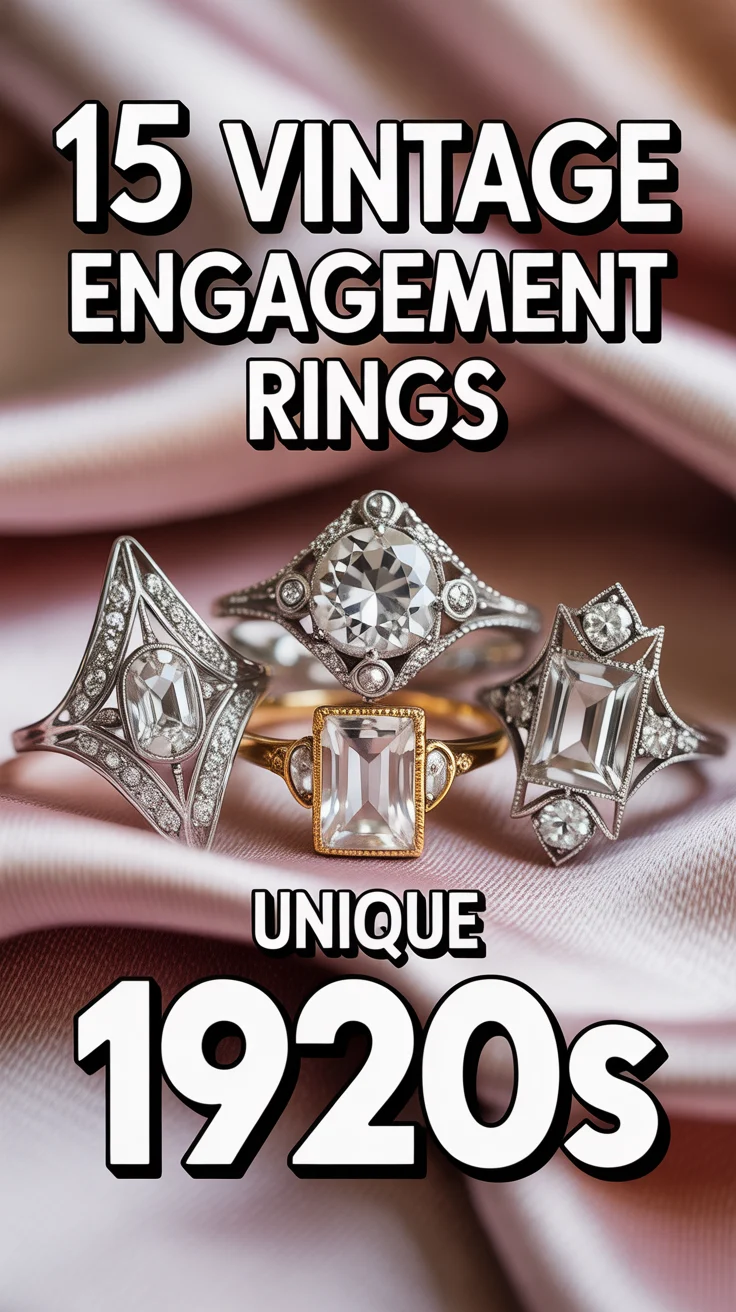
1. Art Deco Geometric Splendor
Seriously, who needs subtle when you can have a miniature skyscraper on your finger? Art Deco rings from the 1920s are all about those bold, geometric shapes and sharp lines. Think diamonds framed by intricate filigree, creating a look that screams sophistication without whispering.
These beauties often feature a central stone flanked by smaller, precisely cut gems, forming a symmetrical design. The craftsmanship is just chef’s kiss and totally unapologetic.
Pro Tip: Look for settings that incorporate squares, rectangles, or octagons for that true 1920s architectural vibe. It’s a statement, not a suggestion.
This style is perfect for the partner who appreciates structure and an undeniable flair for the dramatic.
2. Filigree Fantasies
If you’re into delicate lace but want it in metal form, filigree is your new best friend. These rings showcase incredibly fine, almost lace-like metalwork, often in platinum or white gold, creating an ethereal halo around the main stone.
The tiny, intricate swirls and openwork designs make these rings feel incredibly light and detailed, almost like they were spun by magic. They’re proof that sometimes, less metal means more artistry.
Pro Tip: Examine the filigree under magnification to ensure the details are crisp and not worn down. You want art, not ancient fuzz.
Choose this if you crave a ring that whispers elegance and boasts a level of detail modern rings rarely achieve.
3. Old European Cut Diamonds
Okay, so these aren’t just diamonds; they’re diamonds with personality. Old European Cut (OEC) stones were hand-cut before modern machinery took over, giving each one a unique character and a charming chunky facet pattern.
They sparkle differently, often with a mesmerizing “flash” rather than the fiery brilliance of today’s round brilliants. It’s like comparing a cozy fireplace glow to a laser show – both great, but one just feels warmer.
Pro Tip: Don’t obsess over “perfect” clarity or color. The charm of an OEC is in its unique cut and light return. Embrace the quirks.
This is for someone who values individuality and a sparkle that tells a story, not just a price tag.
4. Sapphire Accents
Why stick to just diamonds when you can add a pop of royal blue? Sapphires were a huge deal in the 1920s, often used as vibrant side stones or to create a striking halo around a central diamond.
They add a touch of color and sophistication, making the ring truly stand out from the crowd. Plus, blue and white together? Classic, darling.
Pro Tip: Ensure the sapphires are natural and well-matched in color. You want a harmonious pop, not a mismatched mess.
Go for this if you want a ring with a subtle hint of color that still feels timeless and incredibly chic.
5. Emerald Cut Elegance
The Emerald Cut in the 1920s was all about understated glamour and clean lines. This step-cut diamond gives off a sophisticated hall-of-mirrors effect, rather than a fiery sparkle.
It’s sleek, it’s chic, and it screams “I know what I’m doing” without needing to shout. Plus, it makes your finger look longer, which is basically a superpower.
Pro Tip: Pay close attention to clarity with an emerald cut; inclusions are more visible due to the open facets. You want crystal clear sophistication.
This choice is perfect for the minimalist who still wants major impact and a touch of old-school Hollywood glam.
6. Platinum Perfection
Before white gold became popular, platinum was the metal of choice for engagement rings in the 1920s. It’s naturally white, incredibly durable, and just looks luxurious.
Platinum’s strength allowed jewelers to create those incredibly intricate filigree and milgrain details without worrying about the metal bending. It’s basically the superhero of precious metals.
Pro Tip: Platinum develops a natural patina over time, a soft sheen. If you prefer a brighter look, it can be polished, but the patina is part of its vintage charm.
Opt for platinum if you want a ring that will truly last forever and holds its intricate details with grace.
7. Milgrain Magic
Milgrain is that super delicate, beaded edge you see on so many vintage rings. It’s not just decorative; it adds texture, defines edges, and makes a ring look incredibly finished and luxurious.
This tiny detail takes a ring from nice to “oh my gosh, look at that detail!” It’s subtle but makes a huge difference in the overall vintage aesthetic.
Pro Tip: Check that the milgrain is intact and even. Worn milgrain can indicate heavy wear or poor restoration.
Choose a ring with milgrain if you adore those tiny, intricate details that truly elevate a piece of jewelry.
8. Cluster Rings
Why settle for one diamond when you can have a whole party of them? Cluster rings from the 1920s often feature a central stone surrounded by smaller diamonds, creating a larger, more impactful look.
It’s an ingenious way to maximize sparkle and create the illusion of a much larger single stone, without the single stone price tag. Talk about savvy.
Pro Tip: Ensure all the diamonds in the cluster are secure in their settings. You don’t want any escapees from your sparkle party.
This style is for the person who wants maximum bling and a visually striking ring that catches every eye.
9. Calibre Cut Gems
Get ready for some serious precision. Calibre cut gems are custom-cut stones (often sapphires, emeralds, or rubies) designed to fit perfectly into specific channels or outlines within the ring’s design.
They create a seamless flow of color and sparkle, hugging the contours of the ring’s geometric patterns. It’s basically bespoke tailoring for your gems.
Pro Tip: The beauty is in the fit. Look for tight, precise settings where the calibre cut stones align perfectly with the metalwork.
This is your pick if you appreciate meticulous craftsmanship and a design that feels incredibly cohesive and intentional.
10. Asscher Cut Allure
The Asscher cut is essentially a square emerald cut, offering that same mesmerizing hall-of-mirrors effect but with cropped corners. It’s sophisticated, Art Deco approved, and just plain cool.
It gives off a distinct, elegant flash and is known for its incredible clarity. It’s like a secret handshake for those who appreciate true vintage style.
Pro Tip: As with emerald cuts, clarity is key. The open facets of an Asscher cut don’t hide imperfections well.
Choose this if you want a diamond that’s both unique and exudes a quiet, confident luxury.
11. Two-Tone Metal Mix
While platinum dominated, some 1920s rings cleverly combined metals, often featuring a platinum top for the diamonds and a yellow gold band for a unique contrast.
This mix adds depth and visual interest, proving that you don’t have to pick just one metal. It’s like having the best of both worlds, fashion-wise.
Pro Tip: Check for any signs of wear where the two metals meet. You want a seamless union, not a shaky alliance.
This is ideal for someone who can’t decide between white and yellow metals, or simply loves a bit of unexpected contrast.
12. Engraved Bands
Beyond the filigree and milgrain, many 1920s rings featured hand-engraved details directly onto the band itself. Think delicate floral patterns, swirls, or even personalized initials.
These engravings add another layer of artistry and make the ring feel even more special and one-of-a-kind. It’s a subtle nod to bespoke elegance.
Pro Tip: Ensure the engravings are still crisp and visible. Heavily worn engravings might be charming, but clear ones are better.
This is for the romantic who loves hidden details and a ring with a truly personal touch, even if it’s from a century ago.
13. Low Profile Settings
Unlike some modern rings that sit high and mighty, many 1920s engagement rings featured lower profile settings. This meant they were less likely to snag on everything you own.
They’re practical without sacrificing an ounce of style, hugging your finger comfortably while still showcasing those dazzling gems. Functionality meets fabulousness.
Pro Tip: A lower profile can mean less light hits the diamond from the sides. Ensure the cut and clarity still allow for excellent sparkle.
Opt for this if you want a ring that’s both stunning and incredibly wearable for everyday life.
14. Bezel Set Beauty
While prongs were common, bezel settings, where the metal completely encircles the gem, offered incredible security and a sleek, modern-for-its-time look.
This setting protects the diamond from everyday bumps and gives the ring a clean, polished appearance. It’s understated protection, basically.
Pro Tip: Check that the bezel is uniformly smooth around the entire stone. Any unevenness can indicate a poorly set gem.
Choose a bezel setting if you’re active and want maximum protection for your precious stone, without sacrificing style.
15. Toi et Moi Twists
“Toi et Moi” means “you and me” in French, and these rings feature two primary stones nestled together, symbolizing two souls becoming one. The 1920s put their own geometric, Art Deco spin on this romantic style.
Often, these rings would feature two different cuts or even different types of gems, making for a truly unique and symbolic piece. It’s a love story in metal and stone.
Pro Tip: Look for stones that complement each other in size and shape, creating a balanced and harmonious design.
This is the ultimate romantic choice for those who want a ring that literally symbolizes their union in a beautifully unique way.
✨ The Ultimate Reception & Decor Toolkit
Transform any venue from ordinary to unforgettable. These are the 5 décor and celebration essentials that top wedding designers and DIY brides use to create magazine-worthy receptions without blowing the budget.
💡 Twinkle Star 300 LED Curtain String Lights
The single most impactful decoration upgrade for any reception or ceremony. Wedding planners specifically choose these warm-white curtain lights because they create that magical, cascading glow that transforms any venue from ordinary to breathtaking in minutes.
🎂 Kootek Cake Decorating Turntable Kit
If you're creating your own wedding or anniversary cake, this is the all-in-one kit that pastry professionals and home bakers both rely on. The smooth-spinning aluminum turntable and included offset spatulas give you bakery-level frosting results every single time.
🌿 Artificial Eucalyptus Garland Greenery
The number one trending table runner and arch decoration in modern weddings. These ultra-realistic faux eucalyptus vines cost a fraction of fresh greenery, never wilt in the heat, and drape beautifully across sweetheart tables, arches, and staircase banisters.
🏷️ Gold Wedding Table Number Holders
These elegant gold-finish card holders are the tiny detail that elevates a reception from casual to refined. Professional event designers rely on this exact style because they hold table numbers, place cards, and menu displays securely while adding a luxurious metallic accent to every table.
📖 Wedding Guest Book Drop-Top Frame
Forget the traditional guest book nobody ever reads again. This stunning drop-top frame has guests sign wooden hearts that cascade into a beautiful shadow box — a gorgeous piece of wall art you'll proudly display in your home for decades as a permanent memory of everyone who celebrated with you.
Conclusion
So there you have it, fifteen reasons to ditch the generic mall jewelry and embrace the absolute magic of a 1920s vintage engagement ring. These aren’t just rings; they’re tiny pieces of history, dripping with character, unparalleled craftsmanship, and a whole lot of sparkle that modern pieces just can’t replicate. Choosing one means you’re not just getting engaged; you’re stepping into a legacy of style. Go forth and find that perfect, unique gem that screams “you” – and maybe a little bit of “Gatsby.”